Introduction – A New Sound Profile Takes Shape
AXTON's vision is: "First-class sound in every car." To achieve this goal, our engineers work every day to make great sound easily accessible and affordable.
DSP technology is particularly effective for achieving precise hi-fi sound reproduction tailored to each specific vehicle. But how is a DSP sound profile actually created—one that not only works in a single vehicle but is also available to Toyota drivers worldwide? That’s exactly what we’ll show you in this article.
We are working closely with our partner, Kreuz-Garage Klötzli AG—the largest Toyota dealership in the region—to develop our new Toyota sound profiles.
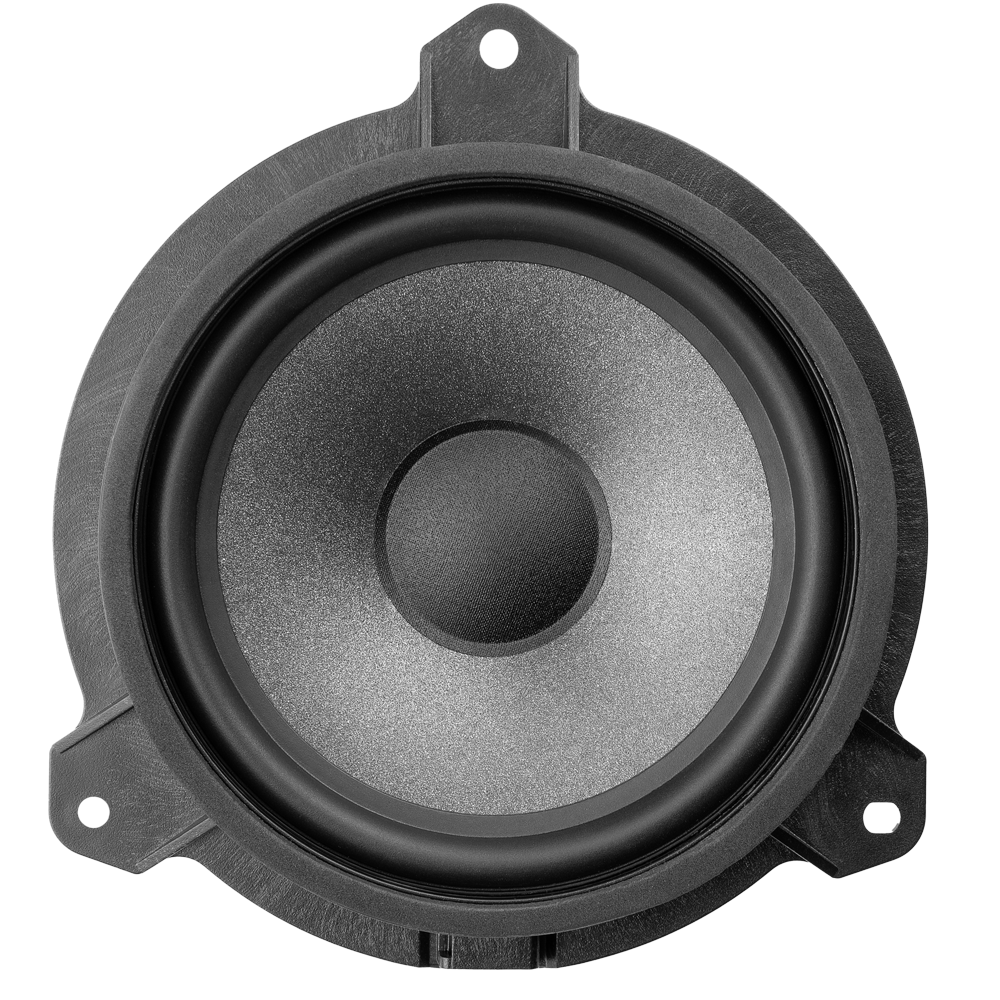
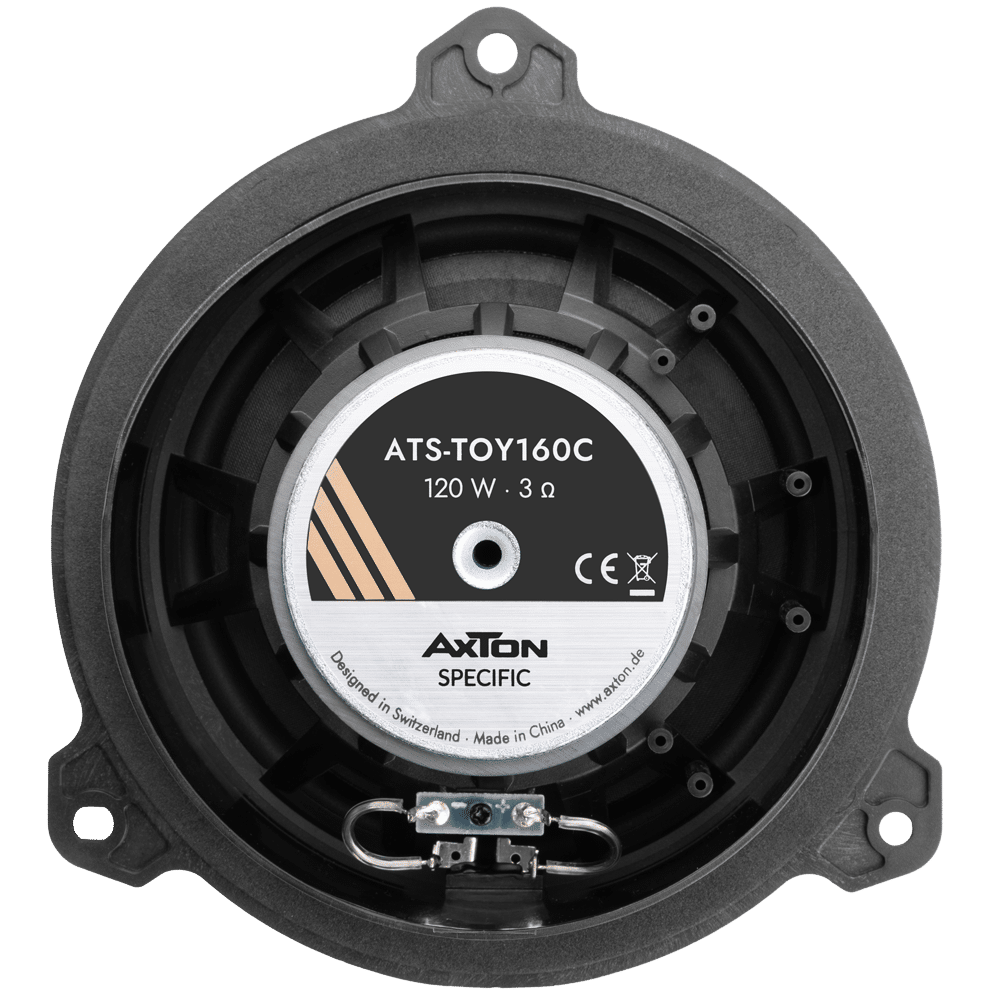
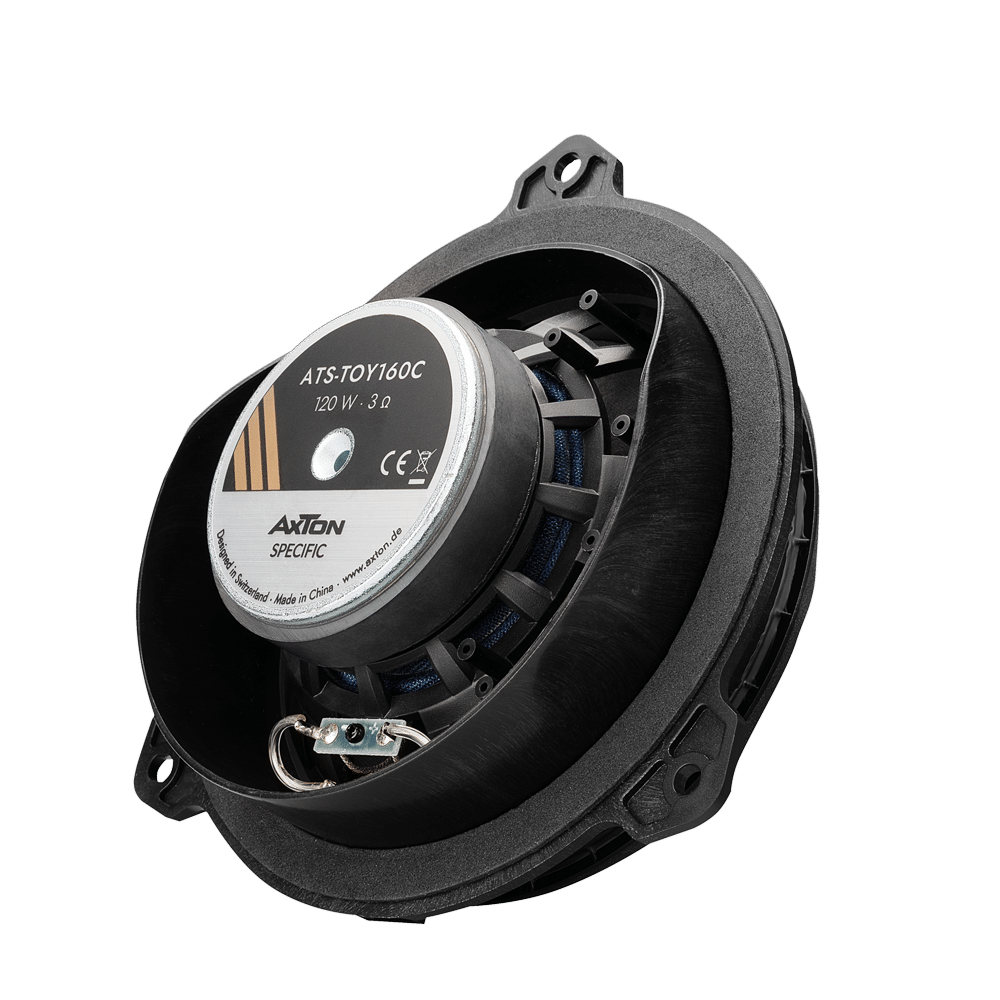
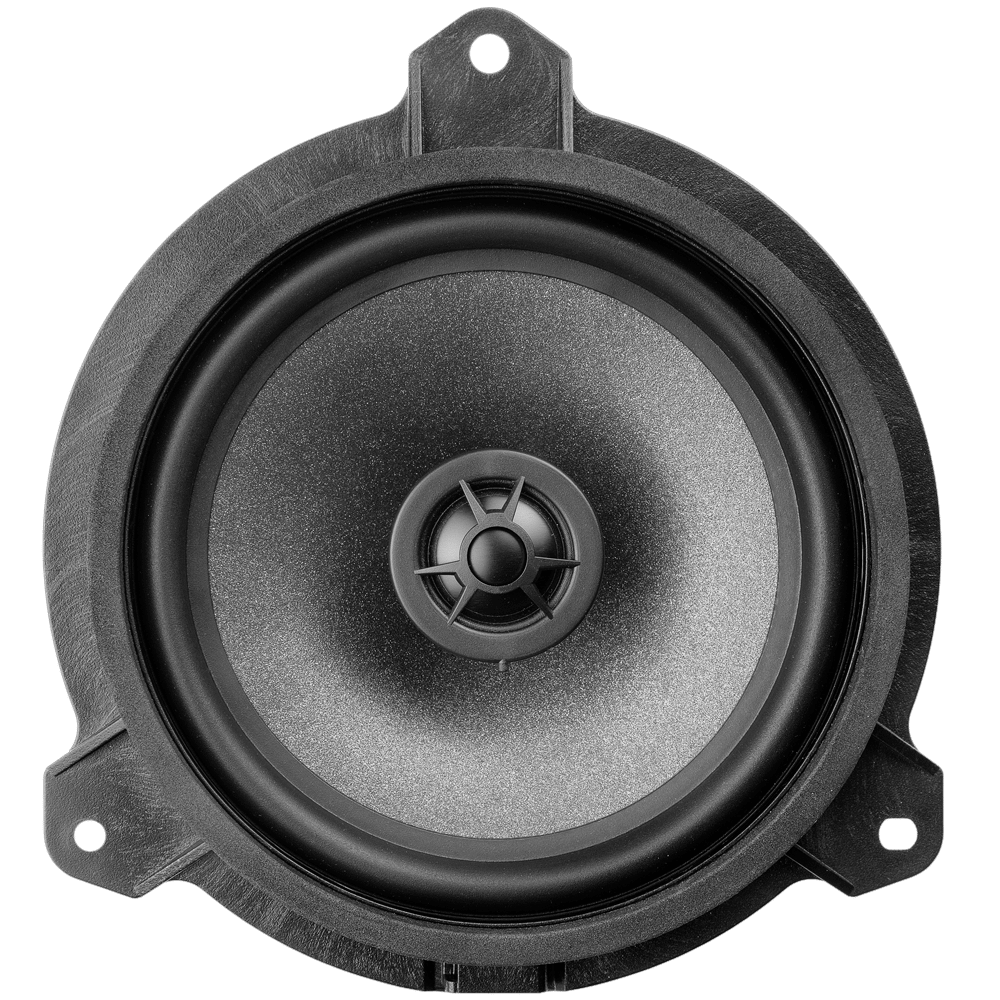
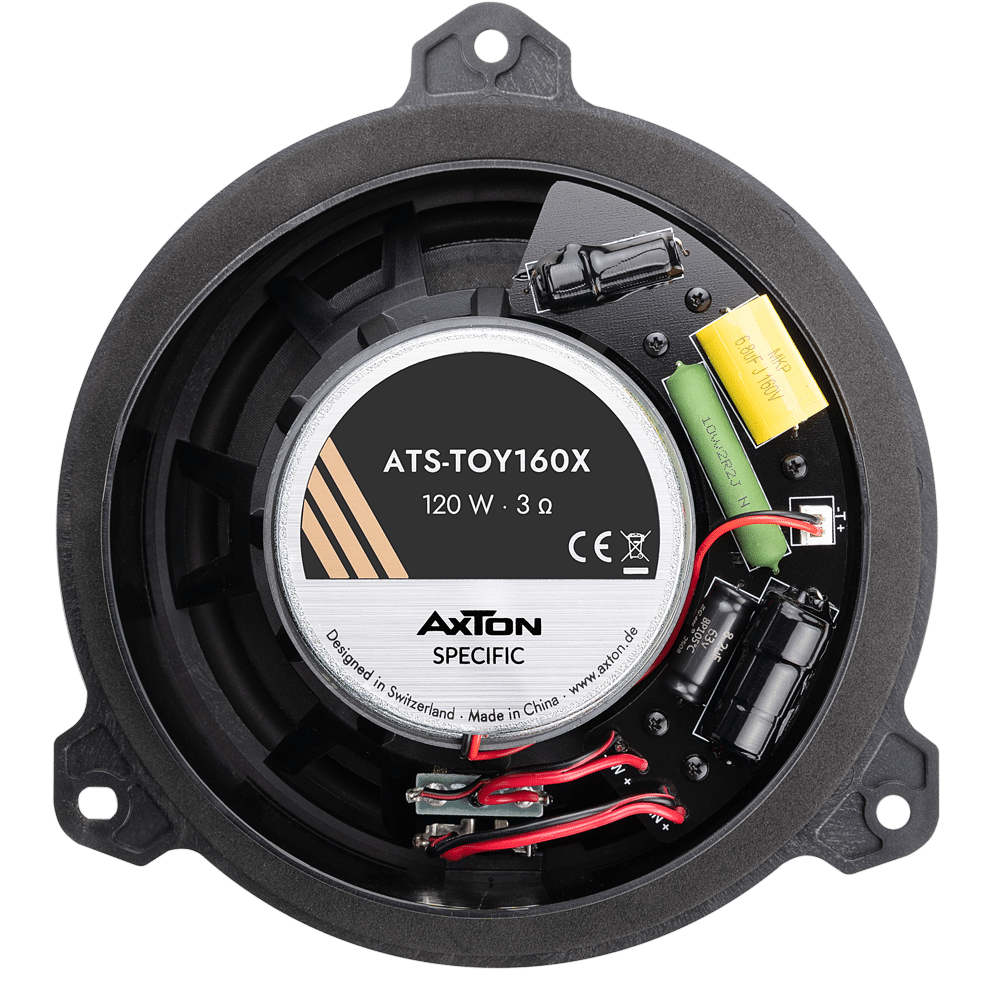
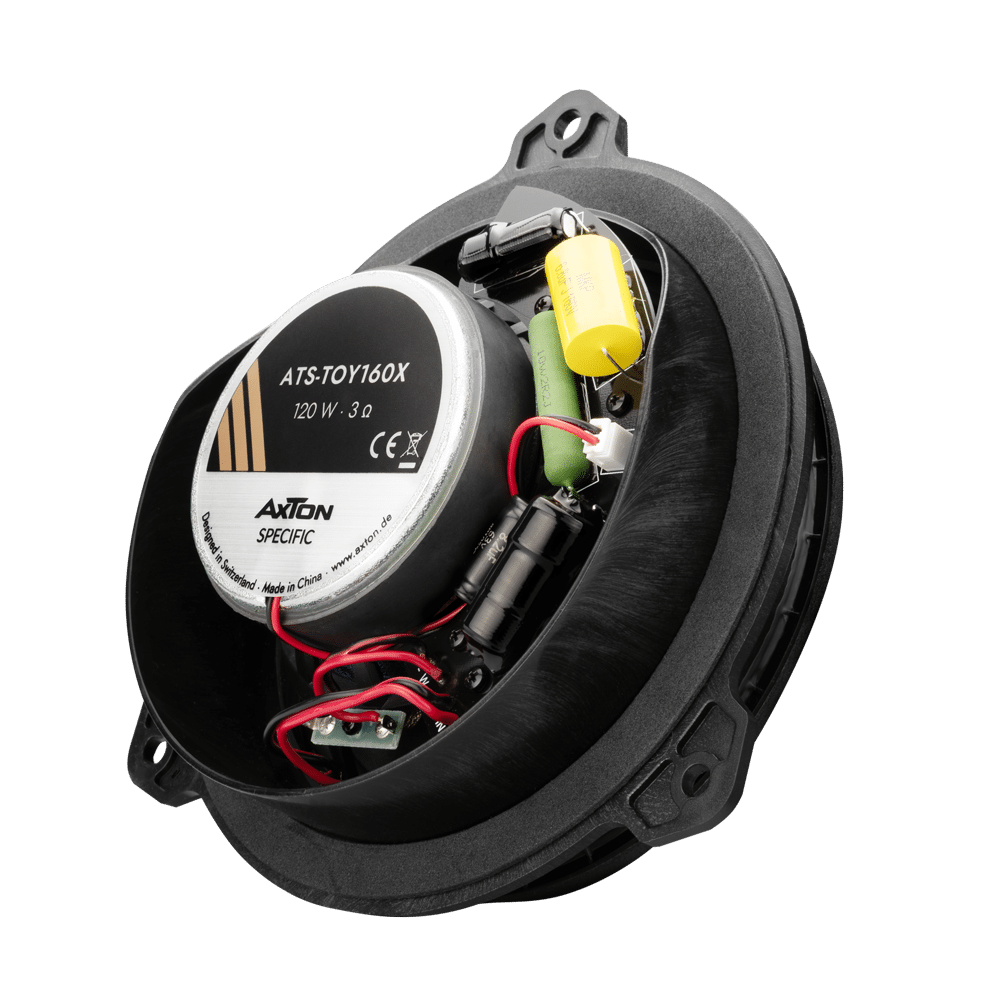
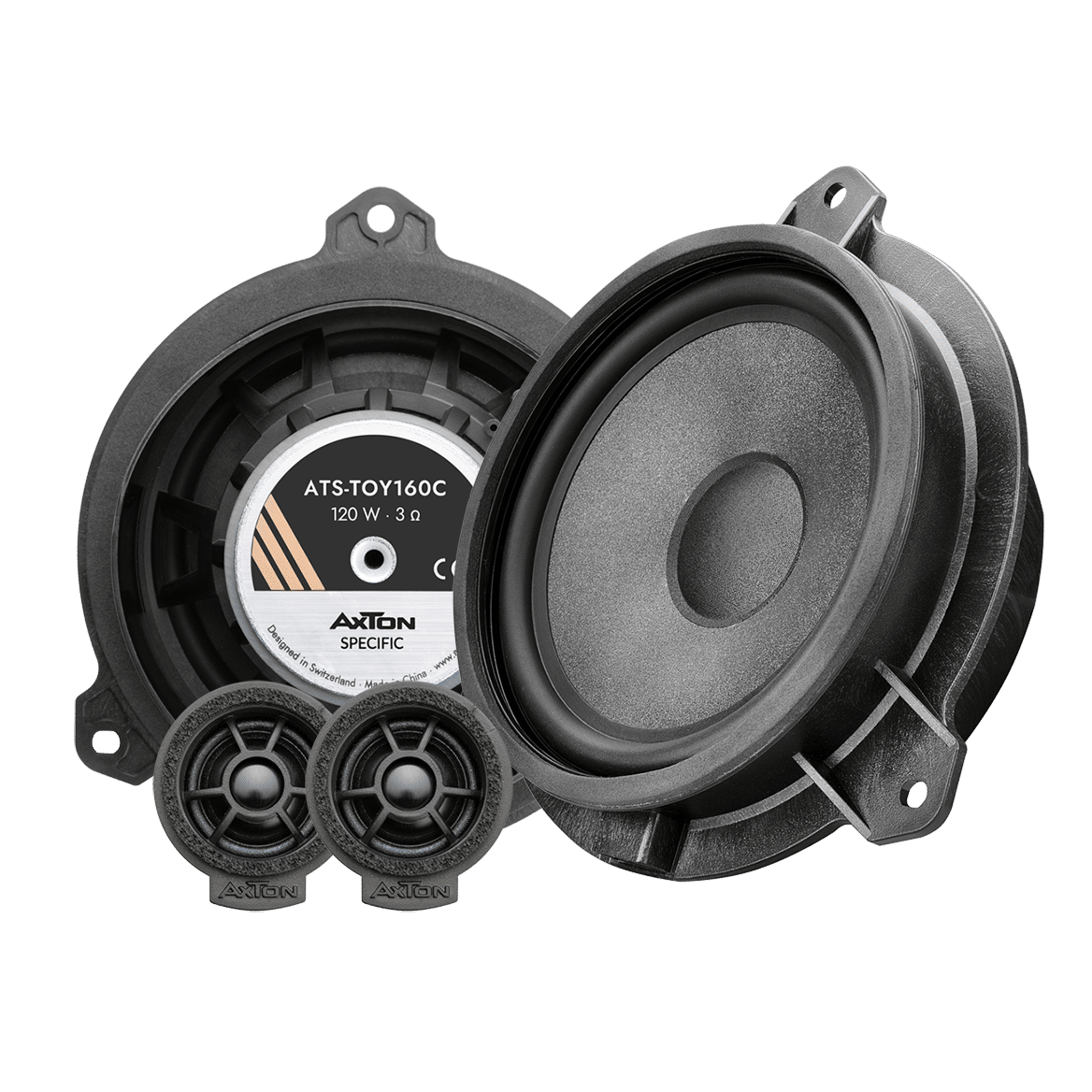
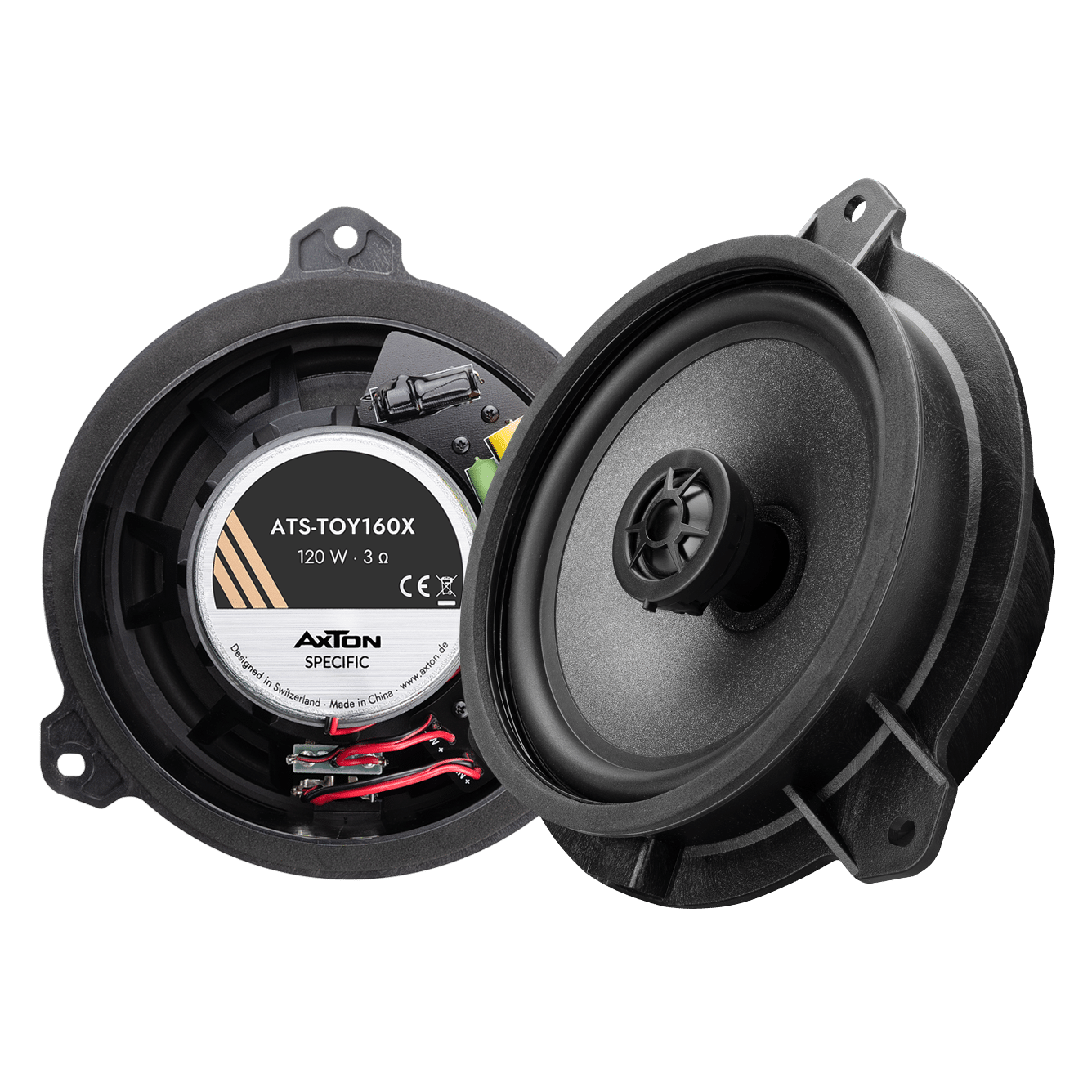
Today, a special project is on the agenda: Four new DSP sound profiles are being developed for vehicles in the current Toyota Aygo and Toyota Yaris model lines—one for each of the standard speaker systems and one for each in combination with the new AXTON ATS-TOY160C and ATS-TOY160X speakers.
The goal is to provide a simple and affordable sound upgrade that, depending on the configuration, can be achieved with an AXTON DSP amplifier or, additionally, with the matching speakers from the AXTON Specific series. Once tuned, the DSP profiles will be available worldwide for free via the AXTON Cloud in the DSP app.
But there’s still a lot of work to be done before then: installation, measurements, listening tests, and fine-tuning. Using the Yaris as an example, we’ll show how a production vehicle is transformed into one with a fully tuned AXTON sound profile.
The Starting Point – How Does the Toyota Yaris Sound Straight from the Factory?
Both vehicles were available to us in the Trend trim level and feature a tweeter in the A-pillar trim (Yaris) and in the dashboard (Aygo), respectively.
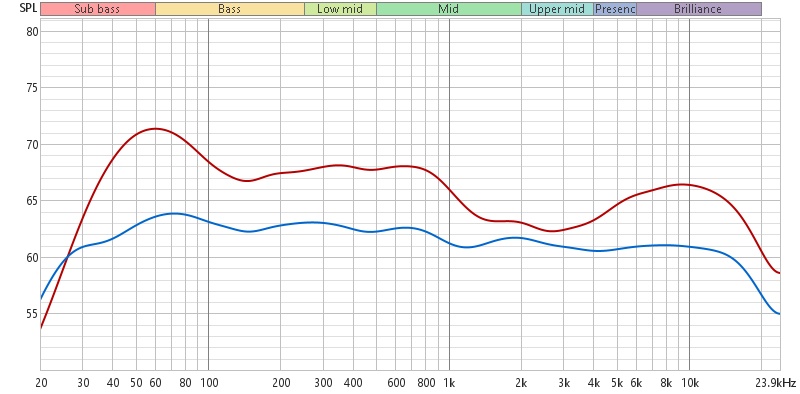
For everyday use, the standard sound system performs well. Speech and traffic announcements are reproduced clearly and reliably. From a music lover’s perspective, however, the system’s limitations become apparent when playing more demanding music: There is still room for improvement in terms of dynamics, detail, and balanced reproduction across the entire frequency range. This is also evident from the initial frequency response measurements of the original system.
The relatively uneven frequency response in the Yaris clearly shows where the sound quality has room for improvement. Due to the sometimes significant peaks, other frequency ranges are pushed into the background and are therefore less clearly perceived. At the same time, the high-frequency range is relatively pronounced, which can make the sound somewhat intrusive, especially at higher volumes.
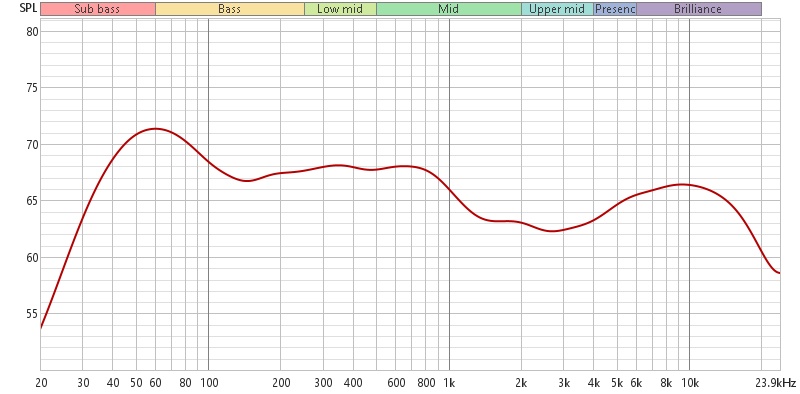
This made the starting point clear: The stock system does its job, but it still has room for improvement when it comes to delivering balanced and detailed sound reproduction. This is exactly where our tuning with the AXTON DSP comes in.
The New AXTON Equipment
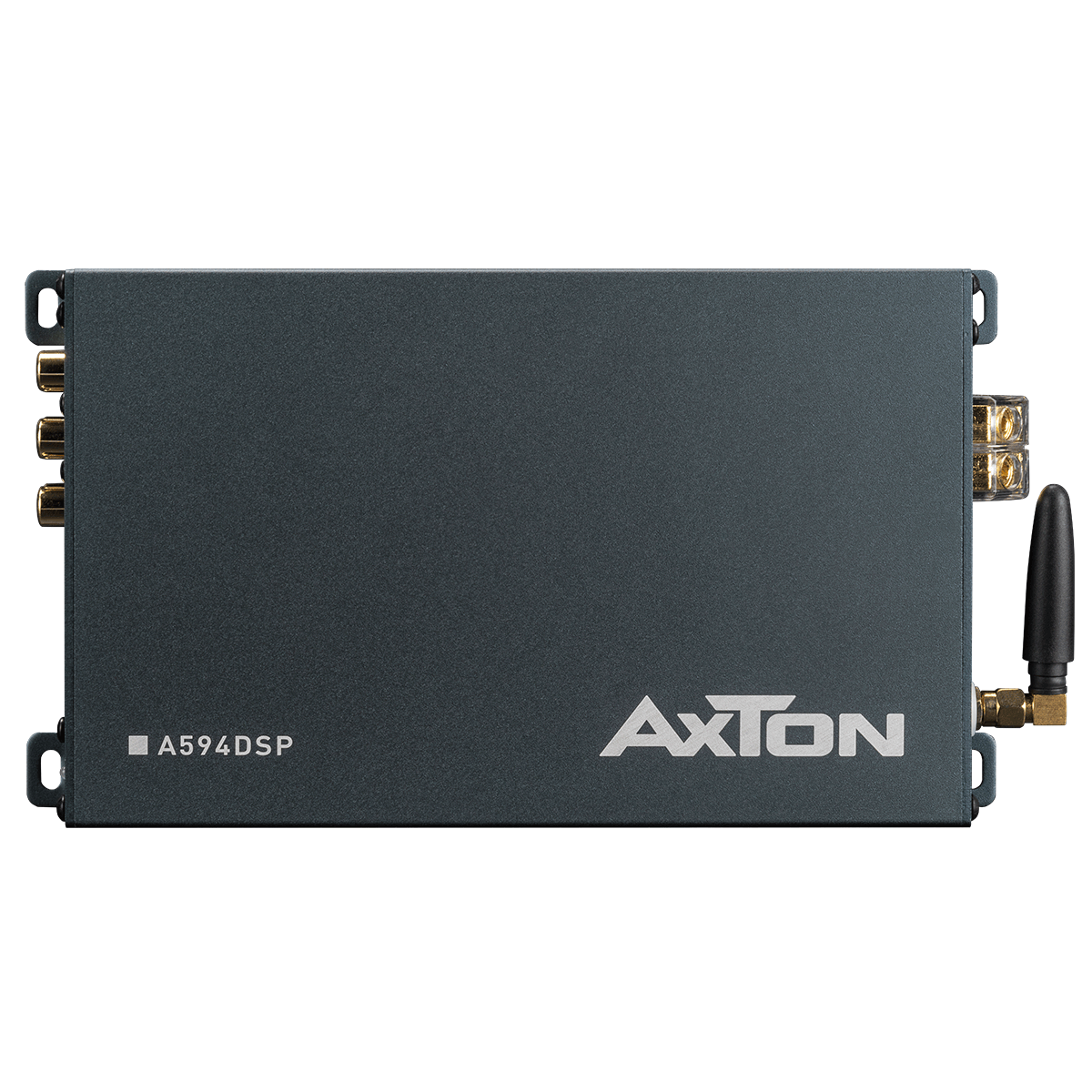
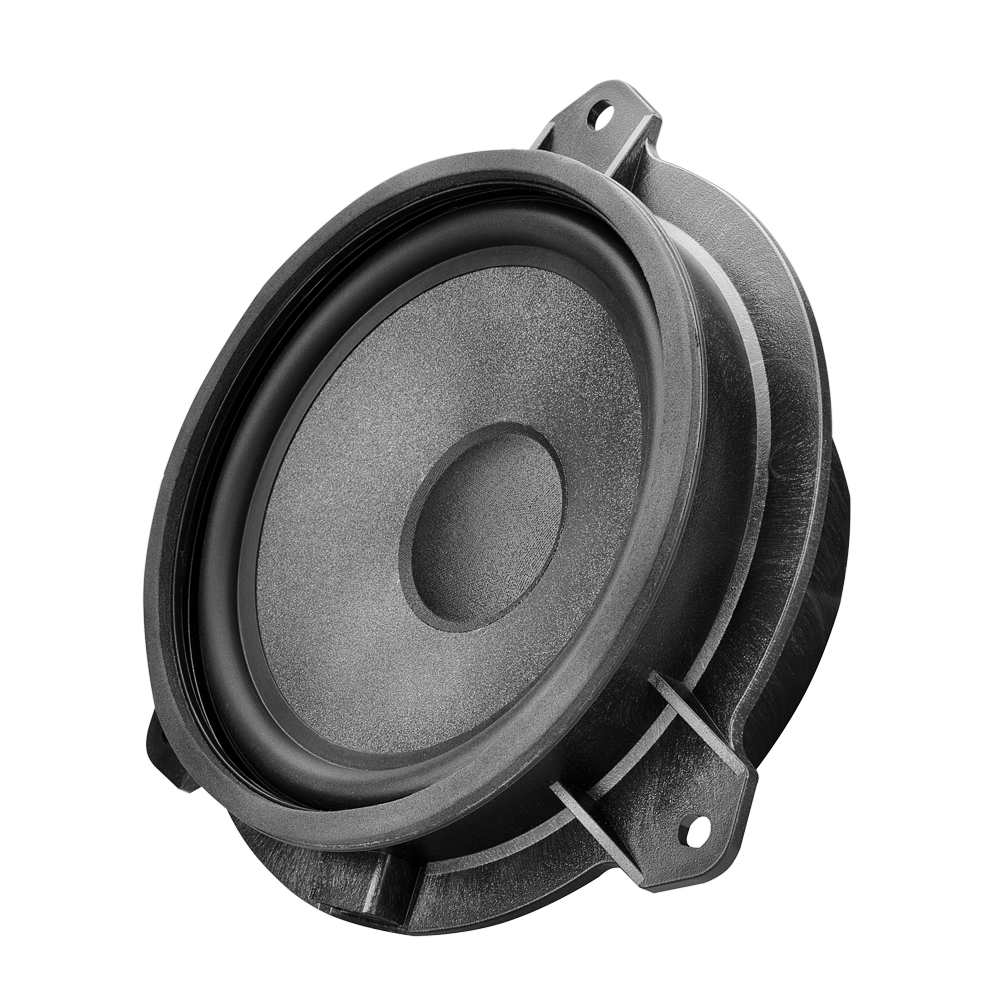
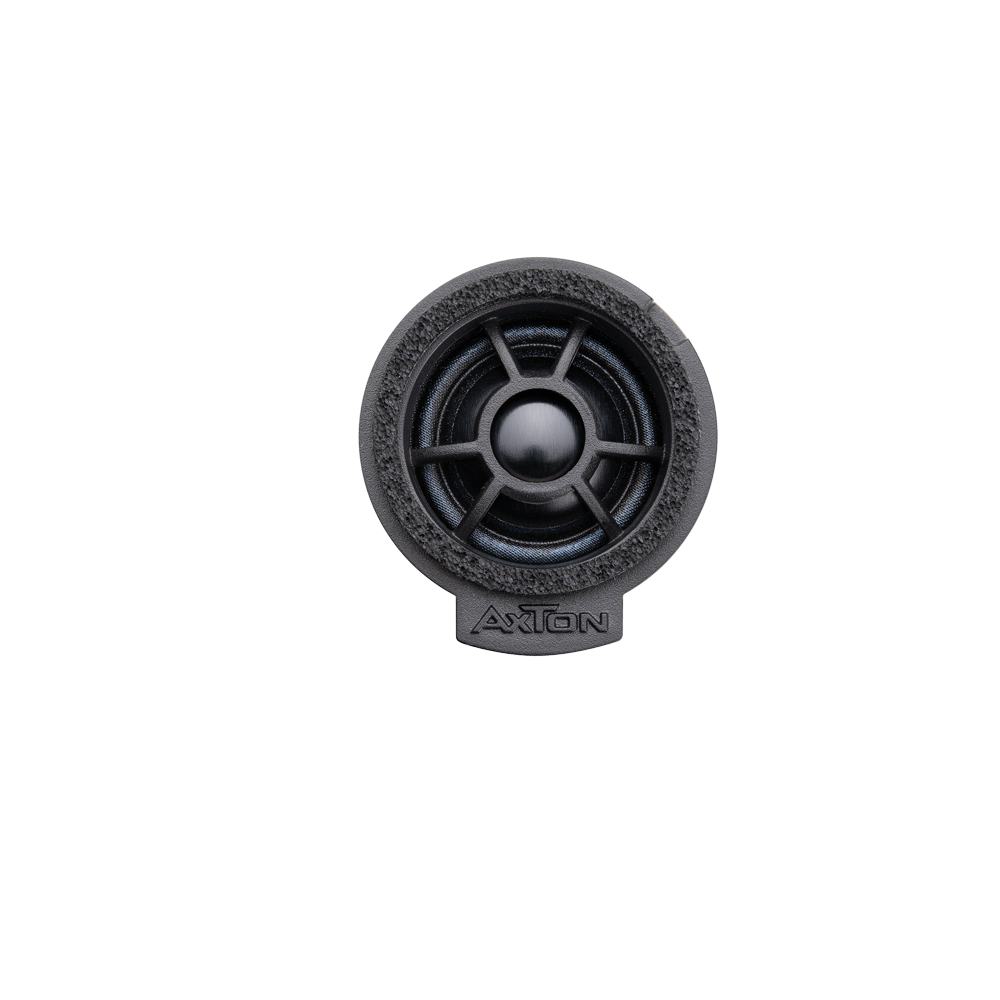
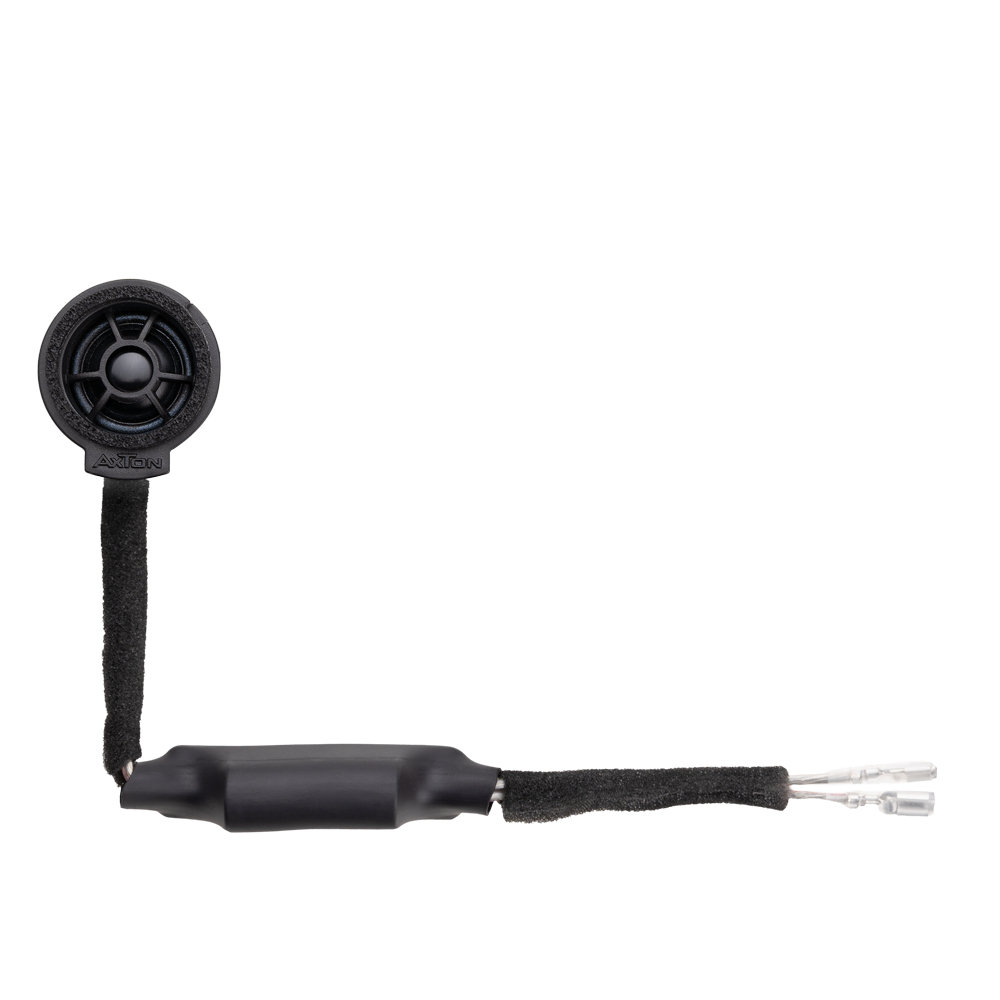
Three AXTON components are used in the development of the four new sound profiles. The A594DSP serves as the basis for both upgrade levels. Depending on the variant, the original speaker system is retained or supplemented with the new Toyota-specific speaker systems ATS-TOY160C and ATS-TOY160X.
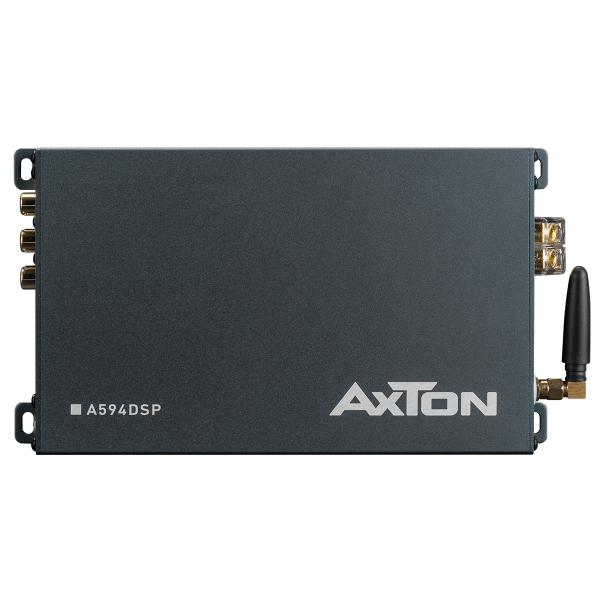

Using the appropriate ATS-ISO65 plug-and-play cable, the DSP is integrated into the vehicle between the radio and the original wiring harness. This makes installation particularly easy and can be done without any major modifications to the vehicle's wiring.
Installation and Measurements
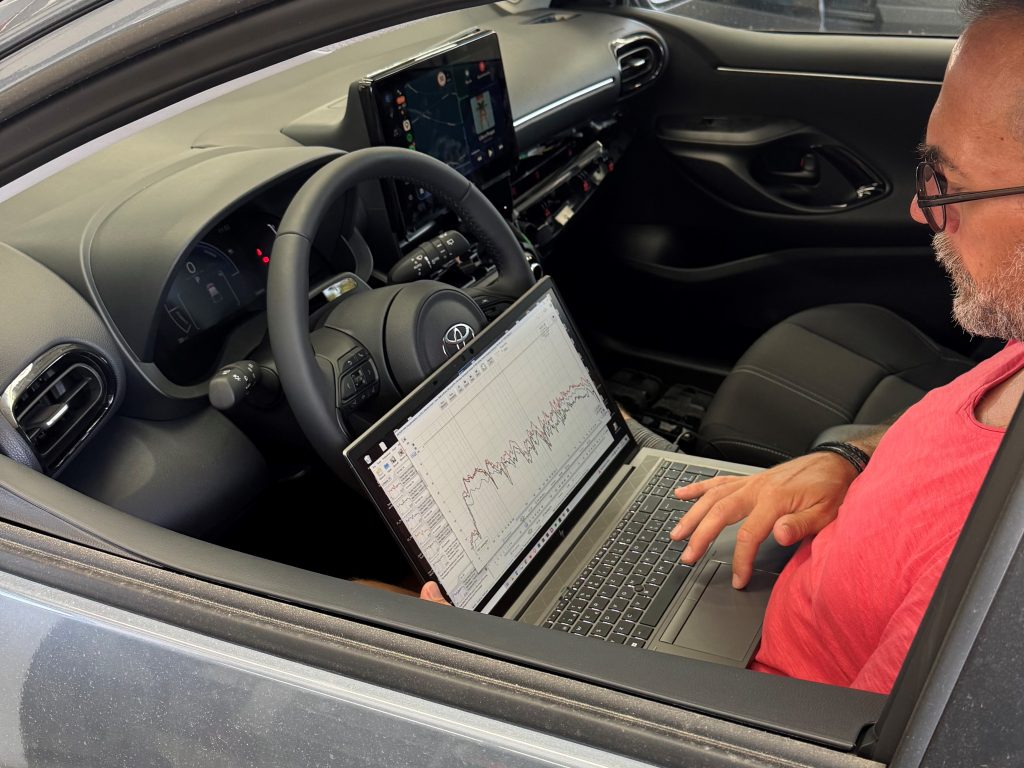
First, the staff at the Toyota service center removed the Yaris’s radio to connect the ATS-ISO65 and the A594DSP. However, before installing the new speakers, we want to use the DSP to get the most out of the original speakers.
After all four speakers had been calibrated individually using pink noise, it was time to fine-tune the system. The REW software assists with this process through its automatic EQ calculation. The calculated values are transferred to the DSP and then verified with a second measurement. Of course, the result is also checked by a trained ear and subsequently fine-tuned—after all, the sound profile must sound convincing not only on the measurement graph but also when listening to music.
The blue curve shows the new frequency response. With the new tuning, transparency, neutrality, and dynamics are at a significantly higher level. And although the frequency response in the bass range is now noticeably more restrained, the sound is crisper while still retaining its impact.
A wide soundstage with great depth and clear positioning of the individual musical elements are crucial for a compelling spatial presentation. This is where the A594DSP's time alignment correction comes into play.
Pro Tip: Runtime Correction with Pink Noise
Instead of a meter stick, we also use pink noise for the runtime correction. Once the correct delay value is reached, you can observe how the diffuse noise becomes acoustically focused in the center of the dashboard. The strongest focus indicates the optimal value.
Finally, a high-pass filter was set at 50 Hz with a slope of 6 dB/octave. This relieves the load on the woofers in the sub-bass range without unnecessarily cutting off the important kick drum range.
This completes the tuning of the first sound profile for the Yaris—A594DSP with the stock speakers. Next, we’ll install the AXTON Specific ATS-TOY160C and ATS-TOY160X systems.
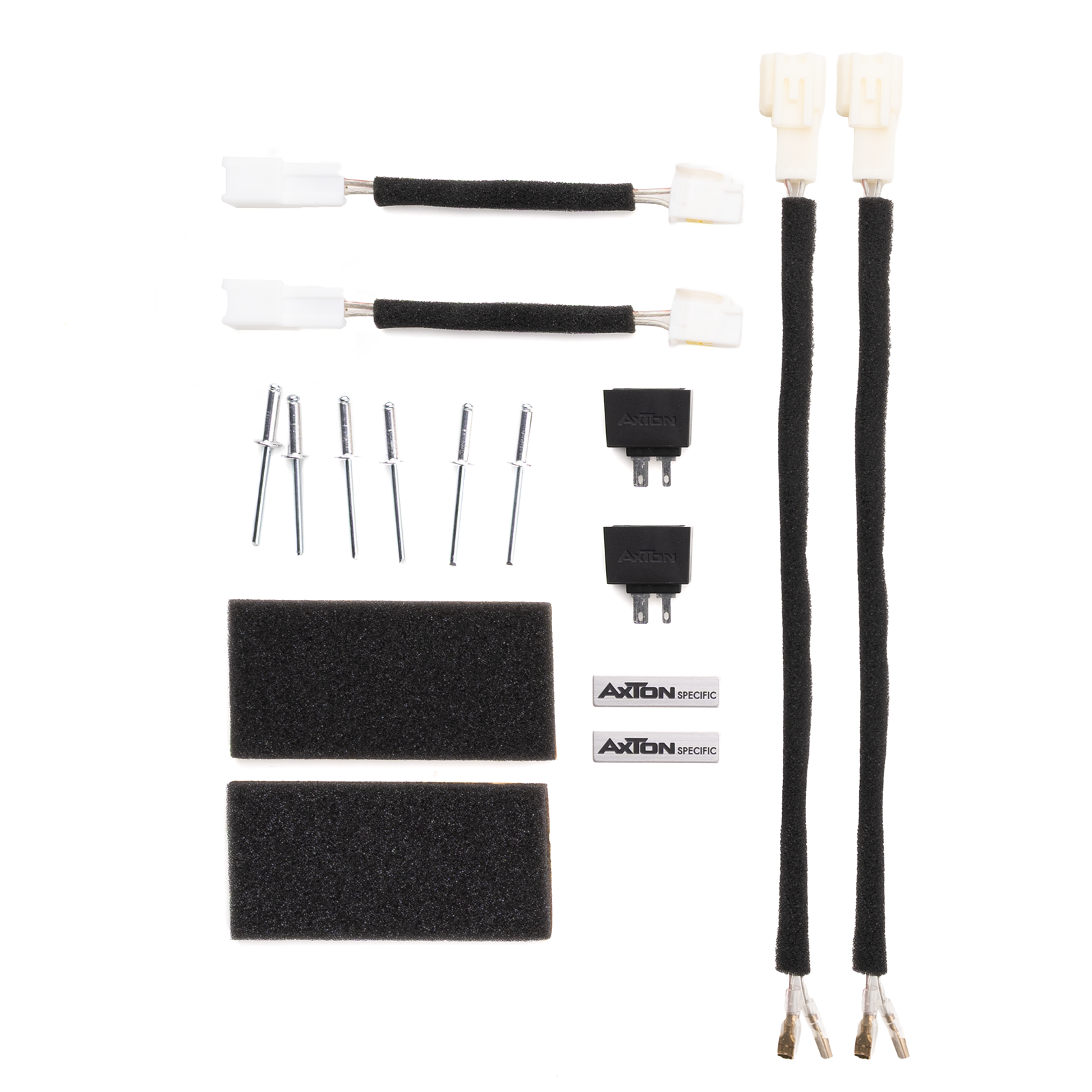
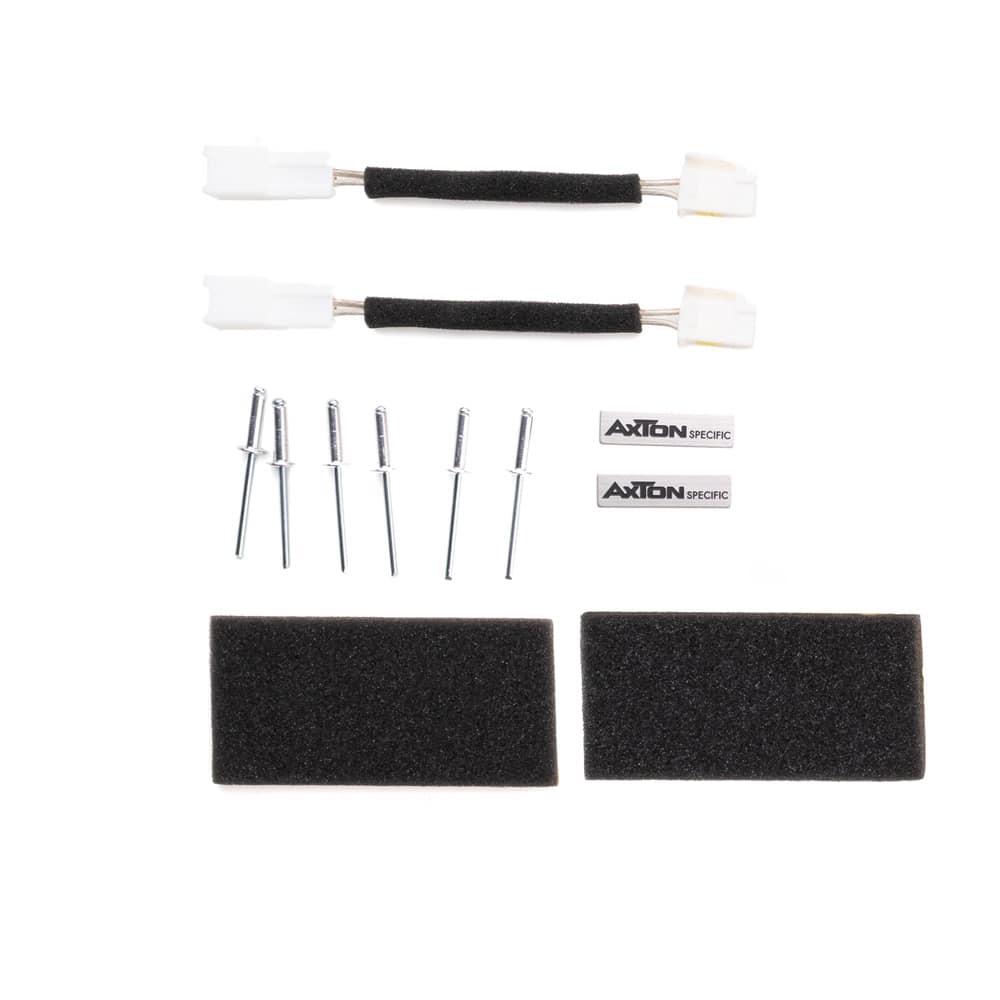
Installing the new AXTON speakers is extremely easy. The trim panels come off quickly, exposing the mounting locations. In the Yaris and Aygo, the original woofers are screwed in place rather than riveted, which makes replacement much easier. The new AXTON woofers fit perfectly and are connected directly to the original connector using the included adapter cable.
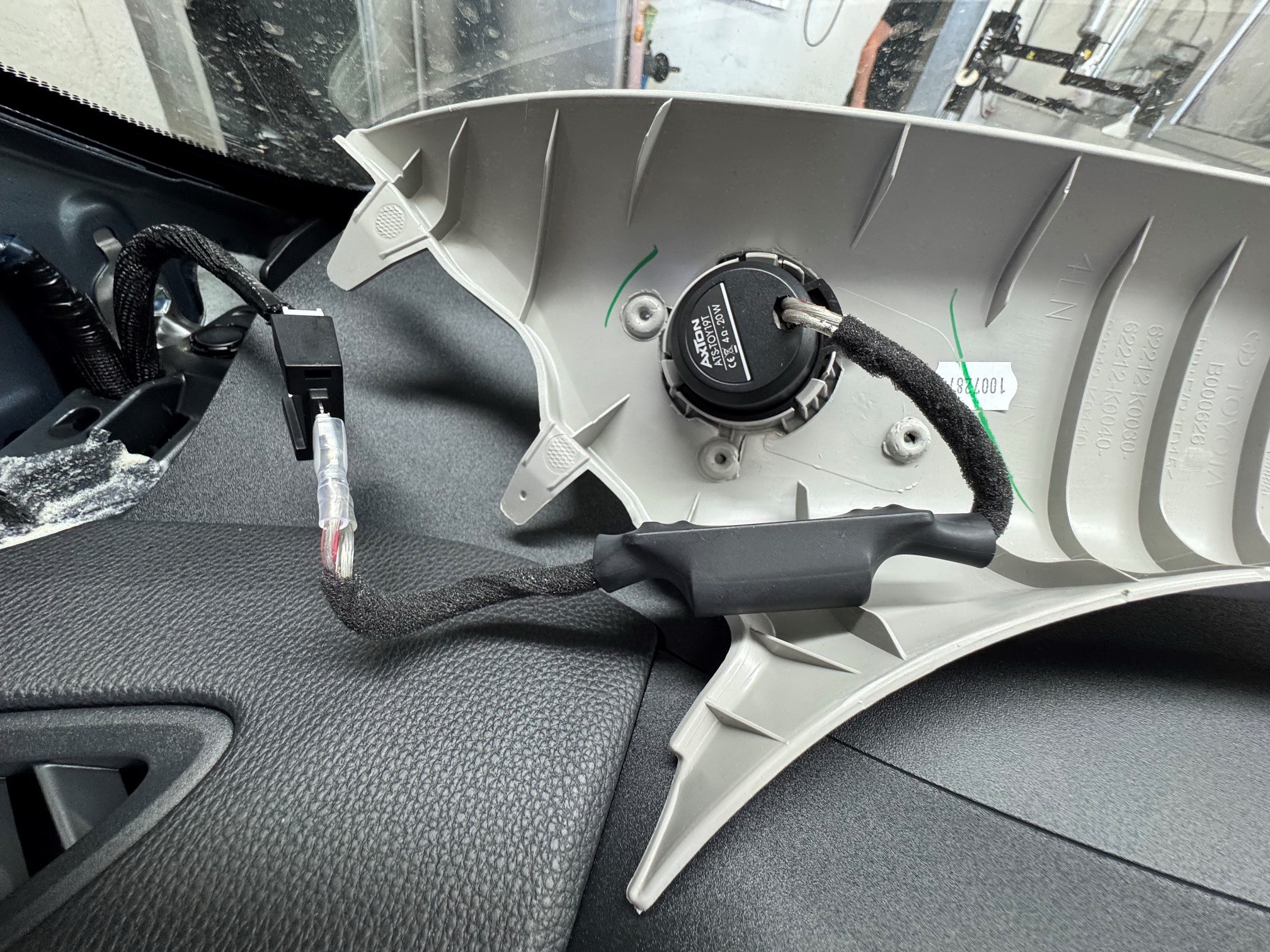
The tweeter can also be easily clipped into the existing mount and connected using the included 2-to-4-pin adapter.
Once the trim panels are back in place, we’ll start taking measurements for the second Yaris sound profile. We’ll follow the same procedure as we did when measuring the original speakers: measure, adjust the EQ, test, fine-tune, and transfer the data to the app. We can carry over the time-alignment correction values from the first profile.
Once the measurements are complete, the decisive practical test follows: an extensive listening test. For this, our technicians use a specially curated playlist of selected tracks that cover a range of sonic requirements. The sound profile is not finalized until the measurement data and the listening experience align and the result meets our standards.
The finished presets are then uploaded to the AXTON Cloud, where they are available free of charge to all Toyota drivers with an AXTON DSP.
This brings our mission to life: We make high-quality sound in cars affordable and easily accessible. And that’s exactly what brings us one step closer to our vision: “First-class sound in every car.” Because for us, good sound is more than just technology—it turns driving into quality time and thus leads to more enjoyment in life.