
Do I even need a subwoofer?
The short answer is: Always! We'll explain why in the long answer below:
One major reason is the noise generated by the car while driving, which drowns out a large portion of the bass frequencies and thus fundamentally distorts the sound. Musical instruments sound thin, and electronic music doesn't really come across as enjoyable either.
So the solution to this problem is to make the bass louder than the road noise. And there is one type of speaker designed specifically for this purpose: the subwoofer. It is specially engineered for deep bass and reproduces the very low frequencies below 80 Hz. This is because for a speaker to reproduce these frequencies effectively, it requires a large diaphragm area and sufficient power to move the large volumes of air required. A 16.5 cm speaker (or smaller) in a component system can only reproduce the lowest frequencies to a limited extent; after all, it’s also supposed to reproduce voices and musical instruments well. That wouldn’t be possible with a large—and therefore heavy—diaphragm. Finally, it’s worth mentioning that only a subwoofer can put a big smile on your face!
What types of subwoofers are available?
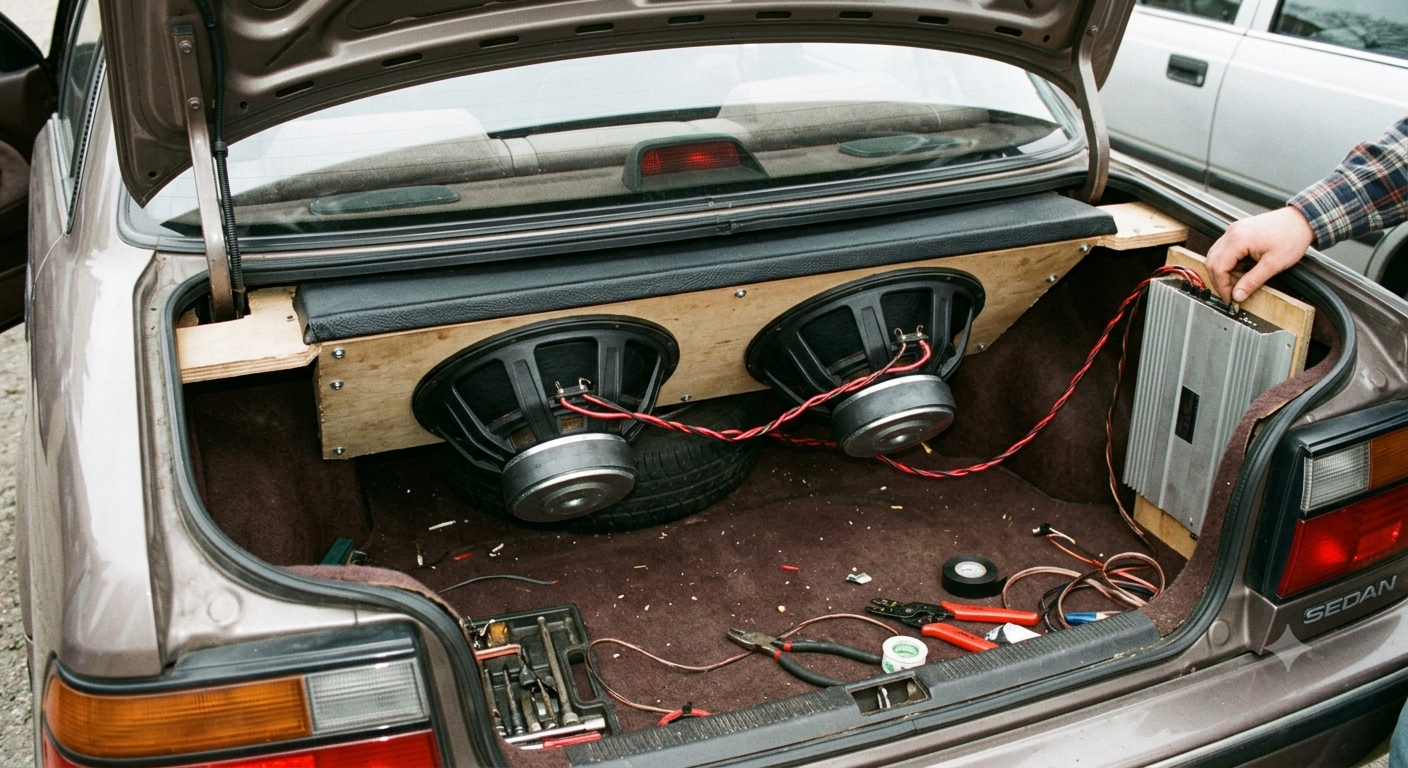
In the early days of the car audio scene, almost all subwoofers were so-called “free-air” subwoofers. These were 38 or 45 cm in size and were mounted directly to the back seat without an enclosure. That’s no longer the case today, and we think that’s a good thing.
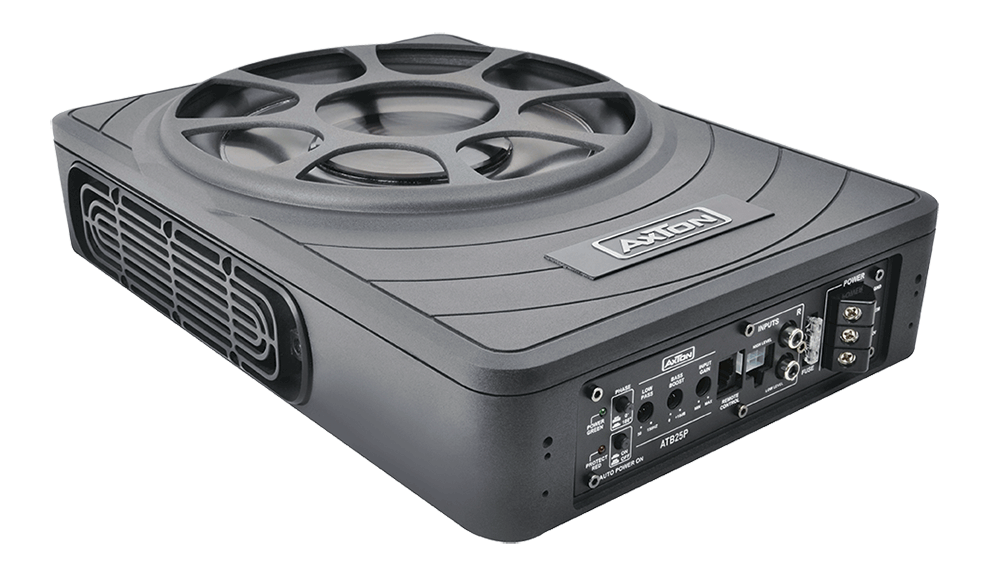
Today, there are various types of subwoofers available for different applications. Active subwoofers—a combination of a subwoofer enclosure and an integrated amplifier—are currently all the rage. The advantage of this design is that the subwoofer, enclosure, and amplifier are all perfectly matched. Such active subwoofers are available in several versions: as under-seat bass units, spare-tire subwoofers (or subwoofers for the spare-tire well), or as classic speakers in various practical enclosure sizes.

Under-seat subwoofers have a flat design and are usually made from a very sturdy die-cast aluminum enclosure. Our ATB20P (with a 20 cm subwoofer) and ATB25P ( with a 25 cm subwoofer) models even feature passive radiators integrated into the sides, which provide an extra boost of bass. Under-seat subwoofers not only fit under the seat, but can also be installed behind the seat, in the trunk on the rear seat bench, or on the side panel, depending on the vehicle. The flexibility of the under-seat subwoofer is therefore its greatest advantage.
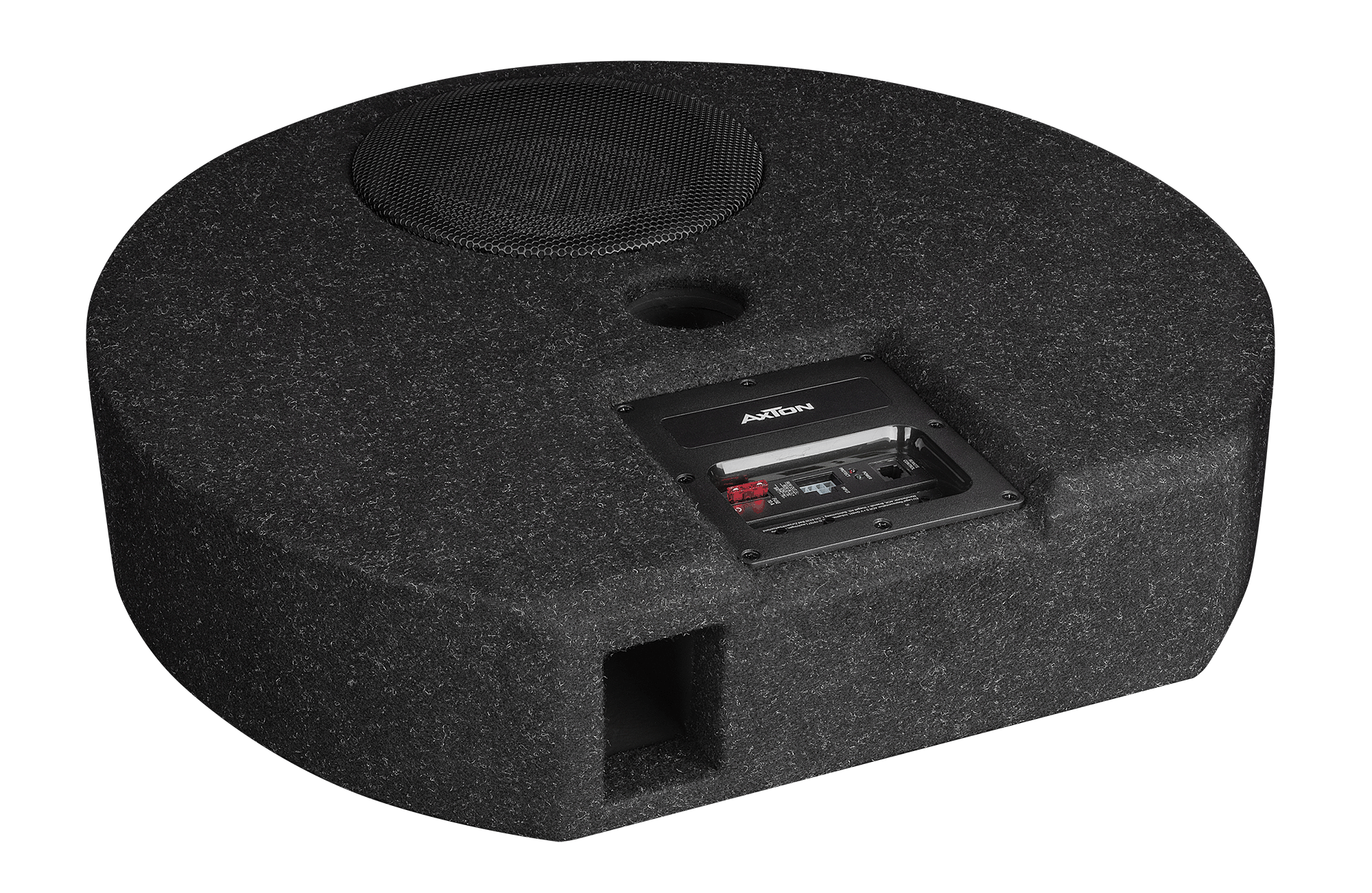
Subwoofers designed for the spare tire well are all the rage. They can be installed out of sight and, thanks to their large enclosure volume, deliver powerful bass to your car. Our extra-slim ATB20RXF subwoofer, with a height of just 12.5 cm, is so slim that it even fits in the spare tire well of a Golf 7.
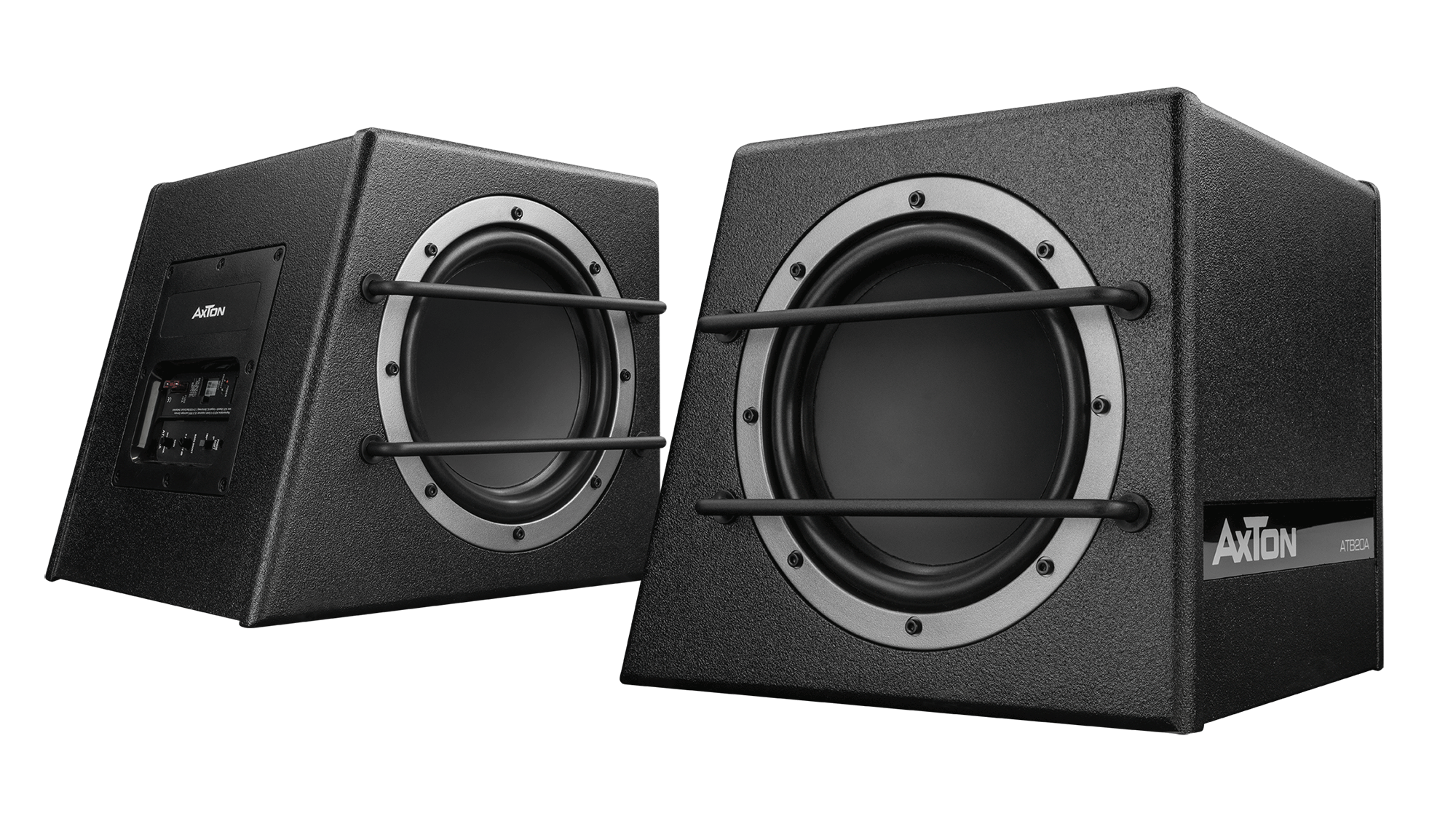
Traditional subwoofers feature an MDF enclosure with a slanted rear panel, ensuring that the subwoofer cabinet doesn't take up any extra space. The subwoofer is usually mounted on the front panel or—as with the ATB120QBA— firing downward according to the so-called down-firing principle. The ATB20A features a different design. Its subwoofer is mounted in the side panel, with a passive radiator on the opposite side.
If you’re handy and enjoy delving deep into car audio, you’ll want to go with a single driver and build your own enclosure—perfectly tailored to your needs. For DIY projects, we offer the ATW16, which is even ideal in some cases for upgrading the subwoofers in factory sound systems.
How many watts for a subwoofer?
First of all: The wattage rating on a subwoofer isn’t the most important factor. It simply indicates how much power the voice coil can handle before it burns out due to overload. In addition to the power specifications, efficiency—or sound pressure level—is the key factor in determining the maximum volume that can be achieved. Efficiency indicates how much of the supplied electrical energy (watts) can be converted into acoustic energy, i.e., sound. It is usually specified as “dB/W/m,” meaning that 1 watt of power is supplied to a subwoofer and the volume of the test signal is measured at a distance of one meter. You should also know that you need ten times the amplifier power to achieve a 10 dB higher volume. A subwoofer with high efficiency (e.g., 90 dB/W/m) can therefore be significantly louder at 200 watts of power than a subwoofer with a high wattage rating (1000 watts) and low efficiency (e.g., 84 dB/W/m).
But there's one more thing…
You can easily connect our subwoofers to your car using a plug-and-play cable—no additional battery cable needed. Just select the T-cable kit that fits your vehicle, plug in the ATS-ISOATB cable and the subwoofer—and you’re done! We call this the EASIEST BASS UPGRADE, and you can find out exactly how it works here.